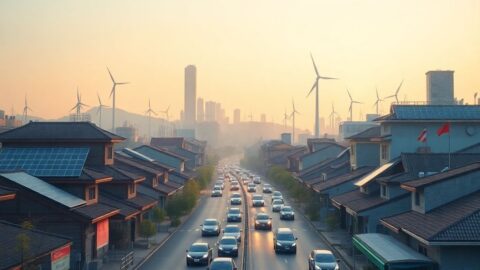
For decades, China has been a major player in energy consumption, particularly of oil. As the world's second-largest economy, its prodigious appetite for oil has long driven global demand, influencing international markets and shaping geopolitical strategies. However, recent trends indicate a decisive shift: oil consumption in China is experiencing a marked slowdown.
Several key factors are contributing to this decline in oil consumption. Primarily, China's well-documented economic transition from an industry-driven to a service-oriented model is redefining its energy needs. The era of rapid industrial expansion, often referred to as the "world's factory" phase, is gradually giving way to a more balanced economic structure centered on technology, innovation, and services. This transition naturally reduces the intensity of oil consumption.
Alongside economic growth, technological advancements play a crucial role. China's aggressive investment in electric vehicles (EVs) and renewable energy infrastructure is driving a decrease in its dependence on oil. The country has established itself as a leader in EV production and consumption, with domestic giants like BYD and international companies like Tesla capturing a substantial market share. Generous government subsidies and support policies further fuel this shift, encouraging consumers and businesses toward cleaner alternatives.
Environmental policies are another pillar of this transformation. Given that air pollution poses serious challenges to health and the environment, Chinese leaders have set ambitious targets to reduce dependence on fossil fuels and transition to cleaner energy sources. The country's commitment to net-zero emissions by 2060 underscores this momentum, shifting the energy dynamic away from oil and toward renewables such as solar, wind, and nuclear power.
Globally, China's reduced oil consumption has far-reaching consequences. Traditionally, its demand has been a cornerstone of global oil markets, determining prices and production levels. This decreased dependence is forcing oil-exporting countries to recalibrate their strategies. Countries like Saudi Arabia and Russia, whose economies are closely tied to oil exports, face pressure to diversify and mitigate the risks associated with a declining market.
Interestingly, this shift is not merely an economic maneuver, but a strategic geopolitical repositioning. By reducing oil imports, China improves its energy security, becoming less susceptible to external market volatility and the geopolitical tensions that often accompany fossil fuel trade. This strategic autonomy strengthens its global political influence, allowing it to redefine international relations to better suit its own interests.
Historically, fluctuations in oil consumption have often reflected broader social and political changes. The oil crises of the 1970s, triggered largely by geopolitical tensions, transformed the global economic landscape and energy policies. Similarly, China’s current shift reflects deeper undercurrents in global socioeconomic orders, underscoring a strategic turn that goes beyond mere energy efficiency.
Expert opinions offer diverse perspectives on these developments. Dr. Mei Li, an energy economist, argues that China's approach serves as a model for sustainable economic growth, demonstrating how large economies can wean themselves off fossil fuels without hindering growth. Meanwhile, political analyst Gareth Williams cautions against over-reliance on renewables too soon, emphasizing the need for a balanced energy portfolio to mitigate the uncertainties of the transition.
Another facet of this narrative revolves around consumer behavior. In urban centers like Beijing and Shanghai, a noticeable shift towards convenience-oriented consumption is evident. This demographic change, driven by a younger, more environmentally conscious population, is altering demand patterns, from private vehicles to public transportation and shared mobility solutions.
Common myths surrounding China's oil consumption emphasize an insatiable demand. However, these narratives often overlook the subtle transitions taking place in the country, including technological innovations and policy changes that are tempering this "insatiability." As global observers and stakeholders analyze these trends, the need for accurate and forward-looking analysis becomes paramount.
In short, China's reduction in oil consumption is not an isolated phenomenon, but rather a reflection of comprehensive changes rooted in its economic strategy, technological advancement, environmental management, and geopolitical strategy. This multifaceted transition has profound implications for global oil markets, energy policies, and international relations. As China forges this path, it is not only redefining its own destiny but also rewriting the global energy landscape.